Explainer
Bank vs Fintech Card Machines in South Africa (2026)
Every big bank offers a card machine, and so do Yoco and iKhokha. When a bank's machine costs less, why most SMMEs start with a fintech, and what to buy.

Some links here are referral links, and where a provider gives our readers a better price than its own site, that is the price you get by using one. It costs you nothing extra, and every option here is judged on the same test either way.

Every big bank in South Africa offers card machines to its business clients: FNB, Standard Bank, Absa, Nedbank and Capitec. Most of us still call them speed points. Payment companies, often called fintechs, short for financial technology companies, sell them too. Yoco and iKhokha are the best known, and Yoco says it's trusted by more than 250 000 growing businesses.
A bank is in the business of banking. Its card machine is one more product, and it works best when your money stays with that bank. A fintech is in the business of getting you paid. That's all it does, so it builds more ways to get paid around the machine, and it works with whichever bank you use.
What's actually different
The two kinds of company differ most in where your money goes, the fee, the payouts and what else you can do. Here are Yoco and iKhokha beside Capitec, the bank with the clearest prices, on card sales up to R50 000 a month.
Two fintechs and a bank, side by side
| Pays into | Fee, local cards | Payouts | Other ways to get paid | ||
|---|---|---|---|---|---|
| Yoco | Any bank | 2.30% | 1-2 business days, free | Payment links, online store, POS | See Yoco |
| iKhokha | Any bank | 2.10%, or 1.85% on Nedbank | Same day on Nedbank | Links, webstore, POS, prepaid | See iKhokha |
| Capitec | Capitec accounts only | 1.85% | Next morning, every day, free | Cards in person only |
Fees exclude VAT. Each company's basic machine costs R699 once-off. iKhokha adds R2.50 for each payout day, and R75 a month for SIM data unless the machine uses your Wi-Fi. Yoco's Instant Payout sends your money within minutes, for a fee.← scroll sideways on a narrow screen →
Capitec wins on the fee and the payouts, as the table shows, but only for people who already bank there. Yoco and iKhokha work with any bank, and they're the ones that let customers pay you away from the counter.
Why most SMMEs start with a fintech
Most shops, stalls and service businesses are better off starting with a fintech, because it solves the problems that make taking cards hard when you're small. You keep your bank, you sign up online, and no contract ties you down. Yoco says signing up takes five minutes, and a Sole proprietorA business owned and run by one person in their own name, also called a sole trader. There's no separate company in law: the business and the owner are the same person, so its contracts and bank account are in the owner's name, and it has no CIPC registration number. Card machine companies such as Yoco sign one up with the owner's ID and a personal bank account.A card machine with no companyA mobile nail technician who works in her own name signs up with Yoco as a sole proprietor, and her card sales go into her personal bank account.A business owned and run by one person in their own name, also called a sole trader. There's no separate company in law, so it has no CIPC registration number, and its bank account is in the owner's name.See every term in the glossary needs no registered company.
No business bank account yet? My guide to getting a card machine without a business account shows how that works.
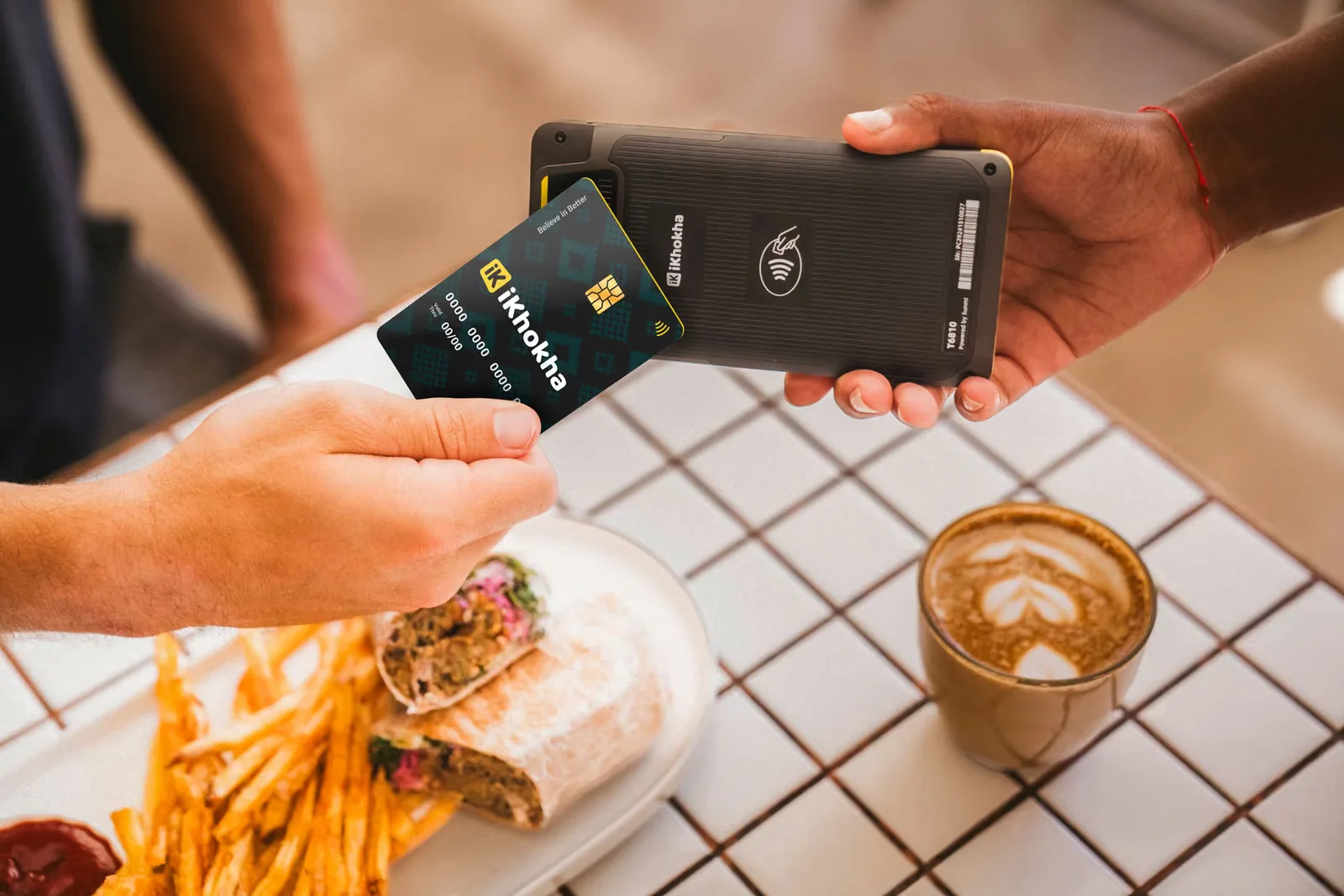
The bigger difference is everything around the machine. A bank's card machine is built to take a card at the counter. Yoco and iKhokha build the rest of what a small business needs to get paid:
Payment links and invoices
Send a link or an invoice by WhatsApp, SMS or email, and the customer pays by card on their own phone.
An online store
Yoco and iKhokha each let you set up a simple online store, so customers can buy from you at any hour.
Point-of-sale software
Yoco's POS app comes free on its Core plan, and iKhokha has its iK POS, to track stock, staff and every sale.
Prepaid at iKhokha
iKhokha's machines sell airtime, data and electricity, and you keep 3% of the airtime you sell for cash.
Say you run a salon that takes booking deposits on WhatsApp. With Yoco or iKhokha, you send a Payment linkA web link you send by WhatsApp, SMS or email. Whoever opens it pays by card on their phone, and the money reaches you the way a card machine payment does. Yoco and iKhokha both include payment links at no monthly cost; you pay a fee on each payment, which can differ from the card machine's (iKhokha's online rate is 2.85% excluding VAT, confirmed 12 November 2026).A deposit at a salonA braider asks for a R200 deposit to hold a Saturday booking and sends a Yoco payment link on WhatsApp. The client pays by card from home.A web link you send by WhatsApp, SMS or email. Your customer opens it and pays by card on their own phone or computer, so they don't need to be at your card machine. Yoco and iKhokha both offer them.See every term in the glossary, and the client pays by card before she arrives. Capitec's machine can't take that deposit for now, so you'd be waiting on an EFT. Caterers, tutors and mobile mechanics work the same way.
Or say you restock a spaza every morning with yesterday's money. iKhokha pays a Nedbank business twice on the day it sells. A sole trader on another bank gets the same with iKhokha's iK Debit Card, linked to a GoTyme Bank EveryDay accountA free personal transaction account from GoTyme Bank, a South African digital bank. It is not an iKhokha product: you open it yourself in the GoTyme app, then list it on your iKhokha profile as your payout account. It is the only account iKhokha's same-day iK Debit Card pays into. iKhokha also pays Nedbank customers twice a day, the same day, with no GoTyme account involved.Same-day money for restockingA spaza owner who works in her own name opens this free account in the GoTyme app, lists it on her iKhokha profile, and has each day's card sales by the afternoon.A free personal transaction account from GoTyme Bank, a South African digital bank. You open it yourself in the GoTyme app and list it on your iKhokha profile as your payout account. It's the account behind iKhokha's iK Debit Card, which is for sole proprietors only.See every term in the glossary. And the same machine sells airtime, data and electricity at a profit.
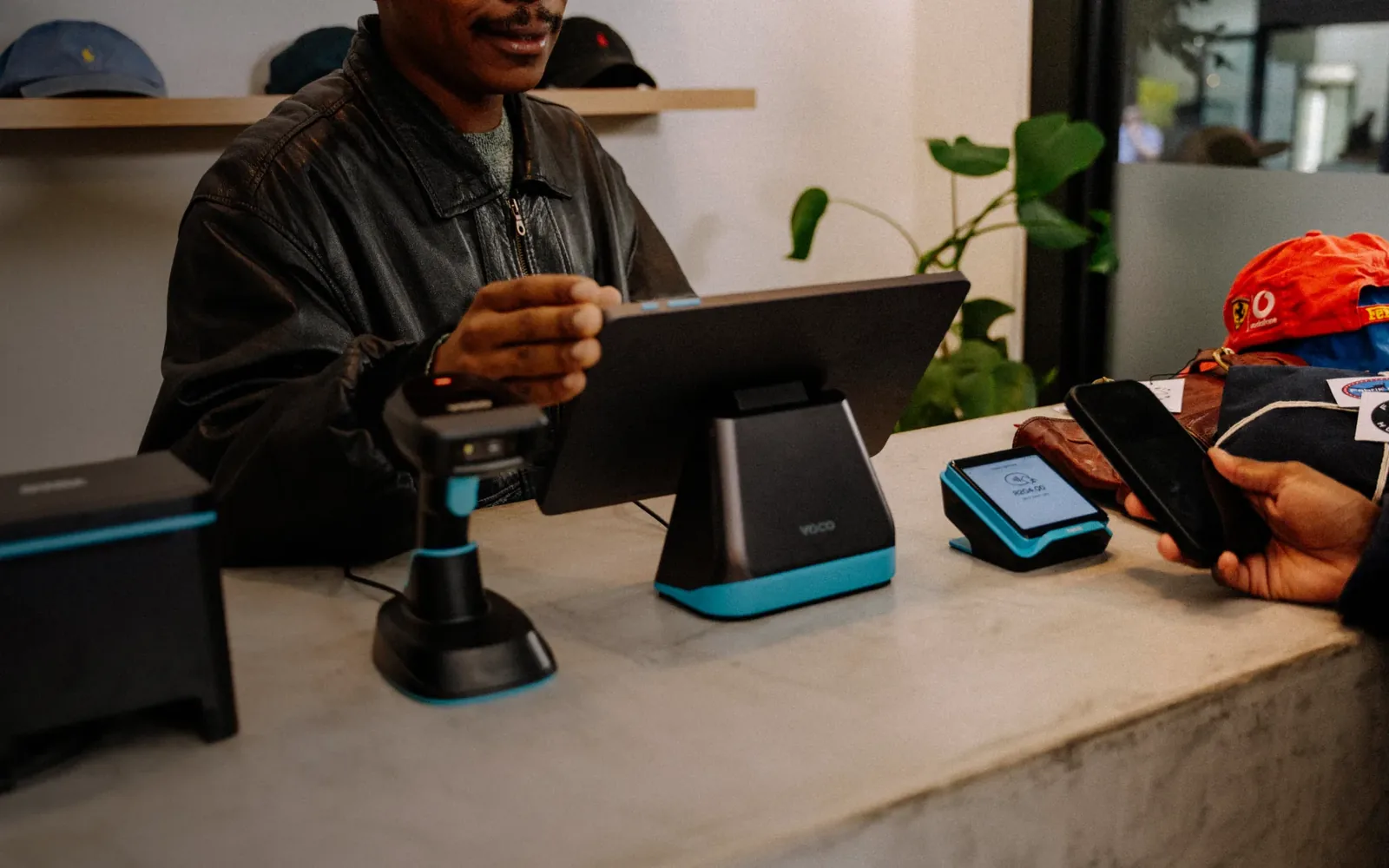
Fintechs also fit the setup to the business. A market trader needs one handheld machine. A café, a bar or a takeaway can add a point-of-sale tablet, a receipt printer and a scanner, all run from the same app.
Help when you need it
Help is easy to reach when something goes wrong. Yoco answers by phone, email and WhatsApp, seven days a week. iKhokha offers support around the clock, on WhatsApp and on a phone line. It also has a walk-in store in Richards Bay and has set up stands in malls, where you can talk to someone in person:
In person
iKhokha's walk-in store and a mall stand
Where iKhokha meets business owners face to face.
-

The front of iKhokha's walk-in store. Supplier image · iKhokha · iKhokha on Facebook
-
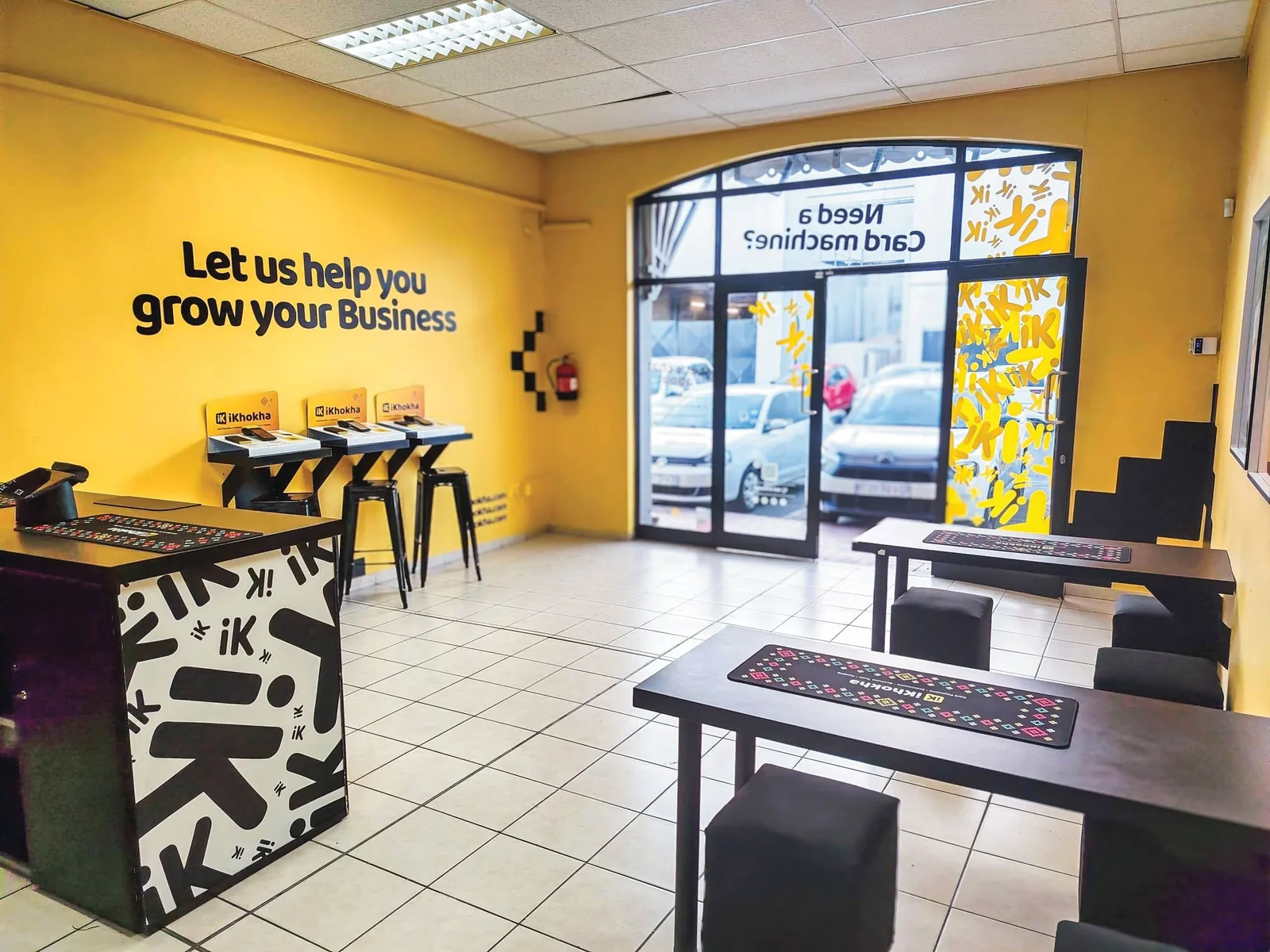
Inside the Richards Bay store, with tables to sit down and get set up. Supplier image · iKhokha · iKhokha on Facebook
-
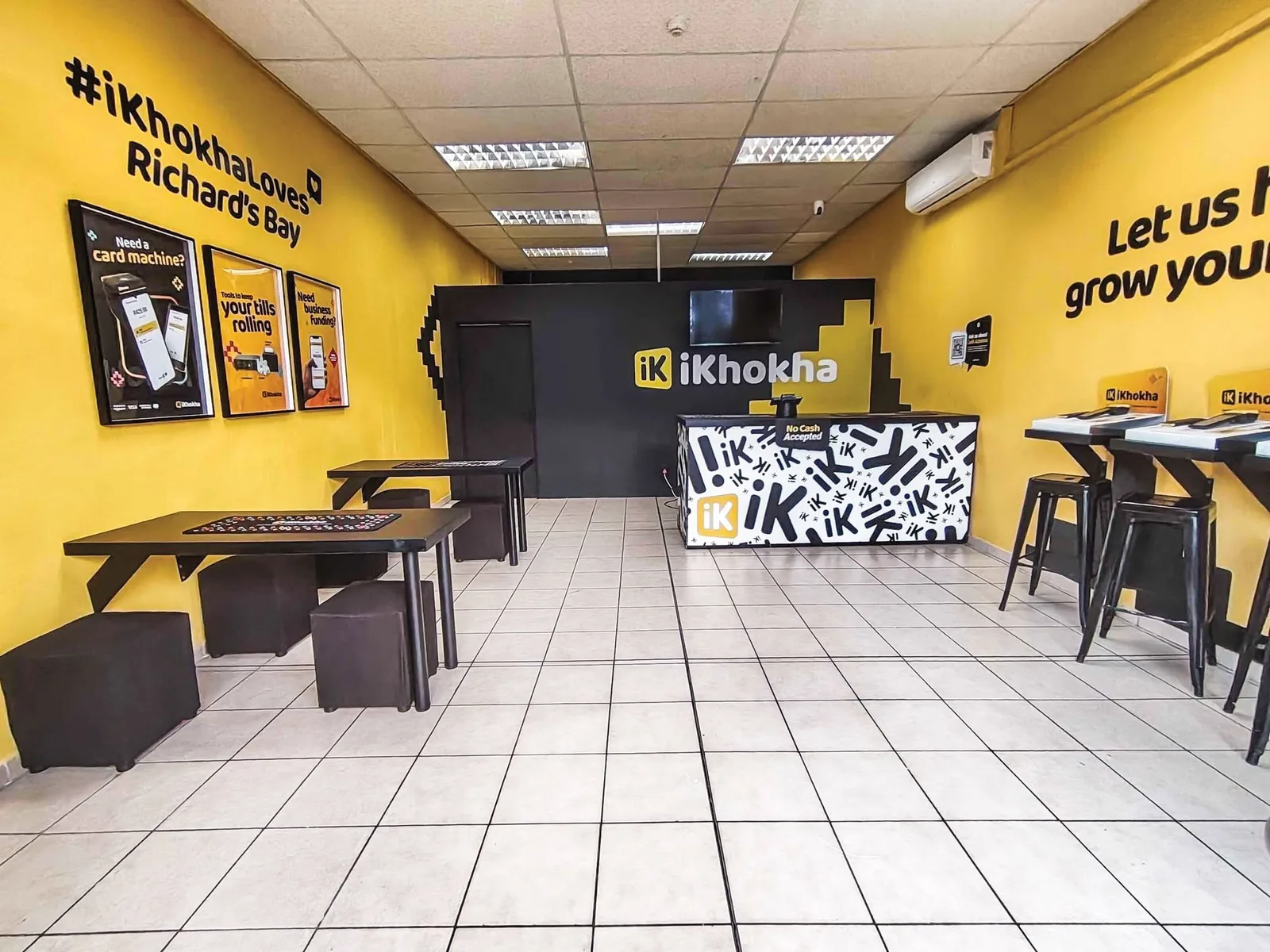
The service counter at the back of the Richards Bay store. Supplier image · iKhokha · iKhokha on Facebook
-
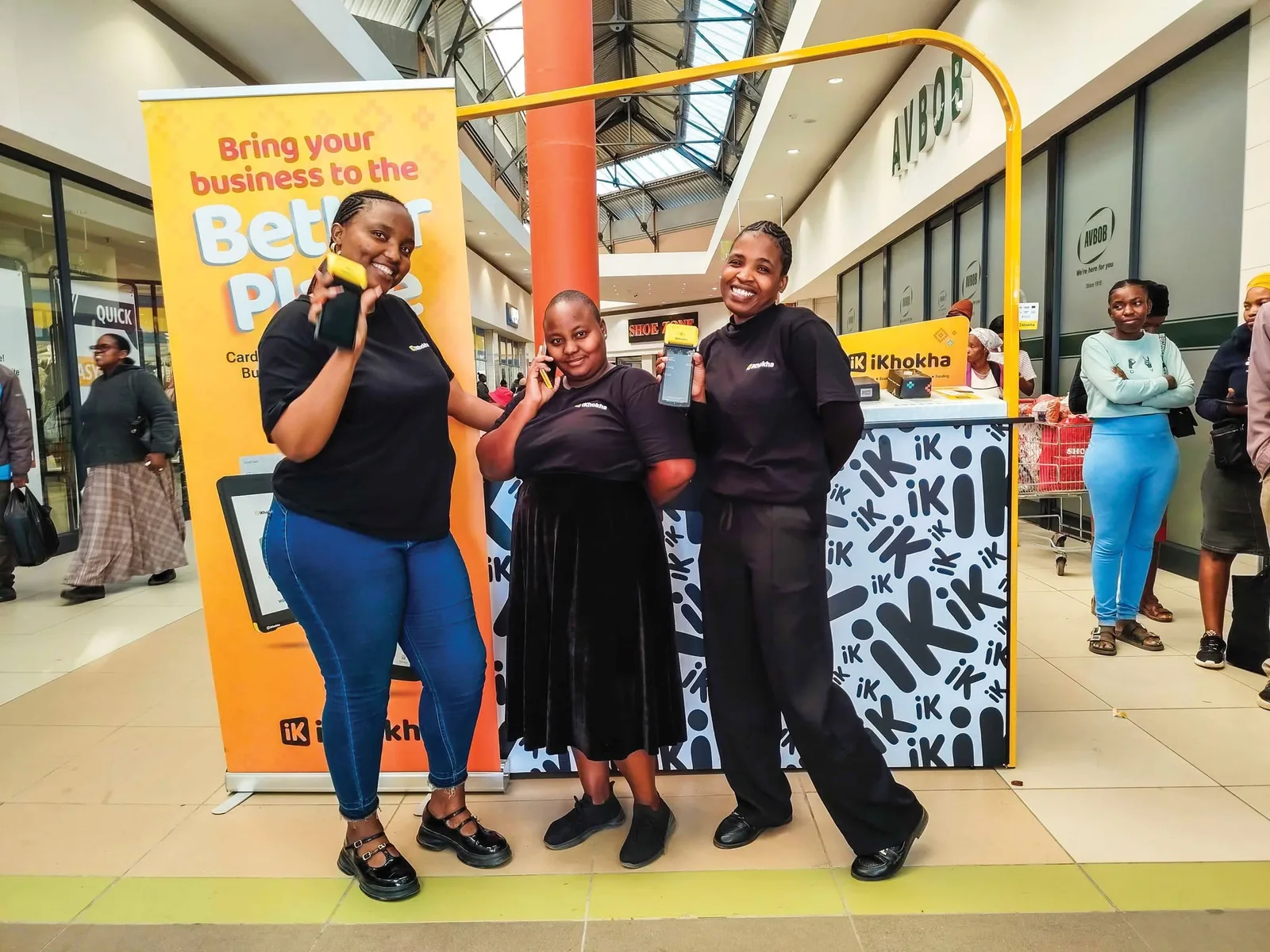
An iKhokha stand in a shopping mall. Supplier image · iKhokha · iKhokha on Facebook
1 / 4
Yoco and iKhokha aren't the only fintechs. There are others, such as HelloPay and WAPPoint, which rents its card machines by the month. I put Yoco and iKhokha first because you own their machines after one payment, with no rental to keep paying.
The two card machines I'd start with
If a fintech suits you, I'd start with the Yoco Khumo 2 or the iKhokha iK Flyer Lite. Both cost R699, and each has a sister machine that prints. Price isn't the only reason to choose between them, so here's the case for each.
The Yoco Khumo 2 and Khumo Print 2
First, nothing to pay each month. The Khumo 2 costs R699 and the Khumo Print 2 costs R1 399, once. There's no monthly fee, and the data on its SIM comes at no extra cost.
Second, one fee that's easy to plan around. Yoco charges 2.30% on every local card until your card sales pass R50 000 a month. So R5 000 of card sales costs R115 in fees. The standard payout is free, into any bank.
Third, room to grow. The same Yoco app adds payment links, invoices, a till and a simple website when you need them, without changing machines.
Who should choose Yoco: market traders, hairdressers, food trucks and pop-up shops, and anyone with no registered company or who banks with FNB, Absa or Standard Bank. You also get R100 off when you sign up with this Yoco discount link.
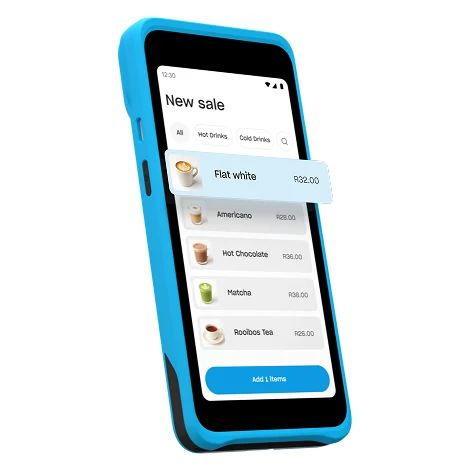
Yoco Khumo 2
2.30% a sale, data included, no contract, and payouts into the bank you already use.
My quick review of the Khumo 2, for anyone leaving the bank's machine behind
The Khumo 2 is the easiest way to take cards without changing banks, because it costs nothing to keep in a quiet month.
Where it stands out
- Pays into any bank
- No monthly fee and no contract
- Payment links and an online store in the same app
Buy it if
- You bank with FNB, Absa or Standard Bank
- You have no registered company
- Some customers pay before they arrive
Skip it if
- You bank with Capitec and only take cards in person
If you skip it, the best alternative
The same R699, and it sells prepaid, with a slightly lower fee, 2.10% against Yoco's 2.30%. But data costs R75 a month and payouts R2.50 a day, where Yoco includes its data and pays out free, so on mobile data it costs a little more to run below about R61 000 a month.
Read our full iKhokha reviewThe plans
You pay for the Khumo 2 once: R699 for the machine, or R599 with the R100 off Yoco gives through the discount links on this page. After that, the plan you choose decides two things, what you pay each month and what Yoco takes from each card sale. Most small businesses stay on Core, which costs nothing a month. The paid plans lower the fee a little and add tools, so pick one for the tools rather than the saving.
Core
R0a month
What you get
- 2.30% on local cards, up to R50 000 a month
- 1.35% on local debit cards above R50 000
- Yoco POS, payment links and invoices
- Payouts to any bank, free in 1 to 2 business days
Terms
- International cards 3.20%
- Instant Payout 1.5%, minimum R17.25
- Fast Payout, by 8am the next day, 0.75%, minimum R7.50
The plan to start on, and the one most people stay on.
Plus
R249a month per shop
What you get
- 2.10% on local debit, 2.20% on credit, up to R50 000
- A loyalty programme at checkout
- Appointment bookings
- More than one shop on one account
Terms
- 30 days free
- International cards 3.10%
On fees alone it saves R100 a month at R50 000 in debit sales, so choose it for loyalty or bookings.
Pro
R499a month per shop
What you get
- 1.95% on local debit, 2.15% on credit, up to R50 000
- Fast Payout by 8am, free for now
- Table-side ordering
- Advanced staff permissions and accounting links
Terms
- 30 days free
- International cards 3.05%
Built for restaurants that take orders at the table.
Prices and plans from yoco.com on 21 Oct 2026. Plan fees are per location and exclude VAT; card fees are on local cards up to R50 000 a month.
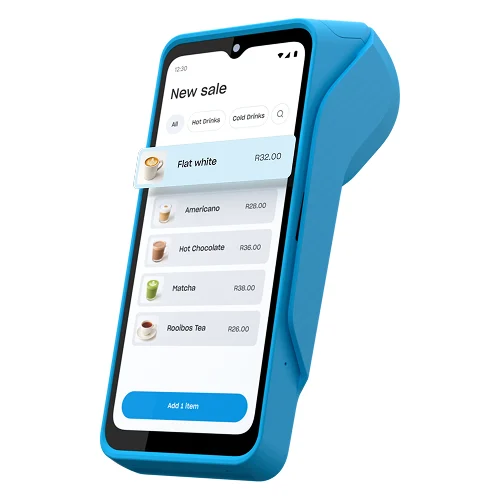
Yoco Khumo Print 2
Prints a slip for every sale, at the same 2.30% fee and with data included.
My quick review of the Khumo Print 2, for a counter that hands over slips
The Khumo Print 2 is the one for a busy counter, where customers expect a printed slip in their hand.
Where it stands out
- Built-in receipt printer
- The same fees as the Khumo 2
- Pays into any bank
Buy it if
- Customers ask for a printed slip
- You run a shop, takeaway or salon counter
Skip it if
- Emailed or SMS receipts are enough: the Khumo 2 is R700 cheaper
If you skip it, the best alternative
It prints prepaid vouchers, which the Khumo Print 2 doesn't, and its fee is slightly lower, 2.10% against 2.30%. It costs R100 more, and adds R75 a month for SIMs and R2.50 a day for payouts.
Read our full iKhokha reviewThe plans
You pay for the Khumo Print 2 once: R1 399 for the machine, or R1 299 with the R100 off Yoco gives through the discount links on this page. After that, the plan you choose decides two things, what you pay each month and what Yoco takes from each card sale. Most small businesses stay on Core, which costs nothing a month. The paid plans lower the fee a little and add tools, so pick one for the tools rather than the saving.
Core
R0a month
What you get
- 2.30% on local cards, up to R50 000 a month
- 1.35% on local debit cards above R50 000
- Yoco POS, payment links and invoices
- Payouts to any bank, free in 1 to 2 business days
Terms
- International cards 3.20%
- Instant Payout 1.5%, minimum R17.25
The plan to start on, and the one most people stay on.
Plus
R249a month per shop
What you get
- 2.10% on local debit, 2.20% on credit, up to R50 000
- A loyalty programme at checkout
- Appointment bookings
- More than one shop on one account
Terms
- 30 days free
- International cards 3.10%
On fees alone it saves R100 a month at R50 000 in debit sales, so choose it for loyalty or bookings.
Pro
R499a month per shop
What you get
- 1.95% on local debit, 2.15% on credit, up to R50 000
- Free fast payouts
- Table-side ordering
- Advanced staff permissions and accounting links
Terms
- 30 days free
- International cards 3.05%
Built for restaurants that take orders at the table.
Prices and plans from yoco.com on 21 Oct 2026. Plan fees are per location and exclude VAT; card fees are on local cards up to R50 000 a month.
The iKhokha iK Flyer Lite and iK Flyer
First, a lower fee per sale. iKhokha charges 2.10% up to R50 000 a month, against Yoco's 2.30%. If your business banks with Nedbank, it's 1.85%, which is Capitec's fee without moving to Capitec.
Second, money on the day you sell. That's on Nedbank, or with the iK Debit Card if you're a sole trader, for R2.50 a payout day. On FNB or Absa, the money arrives the next business day.
Third, prepaid at a profit. Both machines sell airtime, data and electricity, and the iK Flyer prints the vouchers. The iK Flyer Lite costs R699 and the iK Flyer R1 499, and SIM data is R75 a month, or nothing on Wi-Fi.
Who should choose iKhokha: spaza and tuck shops, taverns, takeaways and car washes, and Nedbank customers of any kind. If you're new to iKhokha, this iKhokha discount link takes 10% off either the iK Flyer or the iK Flyer Lite.
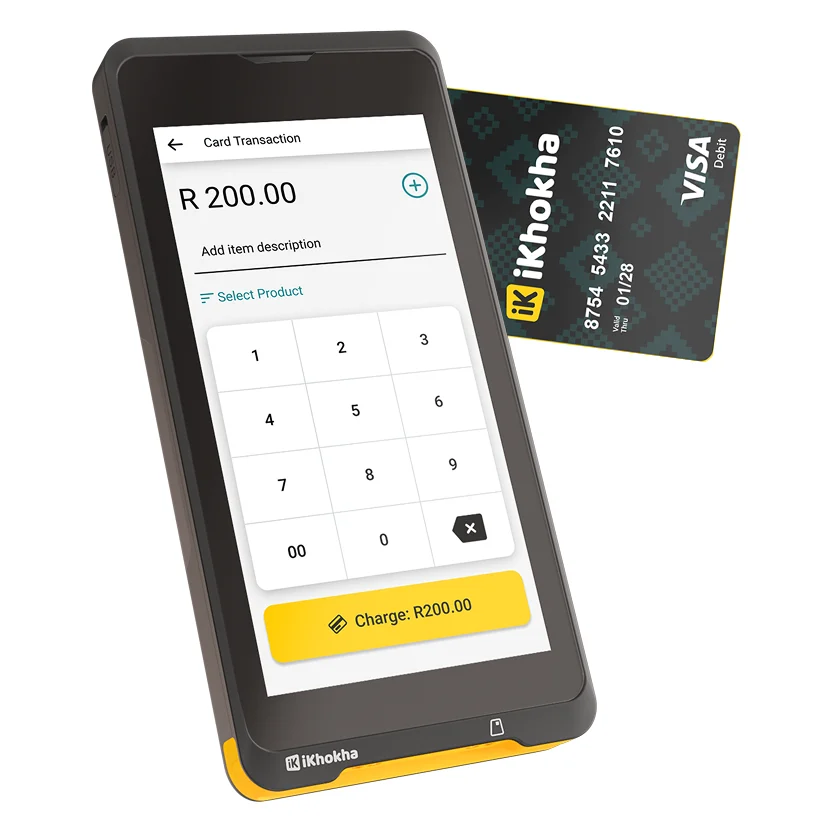
iKhokha iK Flyer Lite
2.10% a sale, or 1.85% on Nedbank, pays into any bank, and sells prepaid at a profit.
My quick review of the iK Flyer Lite, for a Nedbank business or a prepaid counter
The iK Flyer Lite gives a Nedbank business a bank-level fee and same-day money from a company that only does payments.
Where it stands out
- 1.85% and same-day payouts on Nedbank
- Profit on airtime, data and electricity
- Payment links, invoices and a webstore
Buy it if
- Your business banks with Nedbank
- Customers ask you for airtime or electricity
Skip it if
- You want nothing to pay each month: Yoco suits you better
If you skip it, the best alternative
The same R699, with data included and free payouts, so it costs a little less to run below about R61 000 a month, even though its fee is slightly higher (2.30% against 2.10%). The iK Flyer Lite sells prepaid airtime and electricity, and its SIMs cost R75 a month.
Read our full Khumo 2 reviewPrices from ikhokha.com on 12 Nov 2026; the struck price is iKhokha's own.
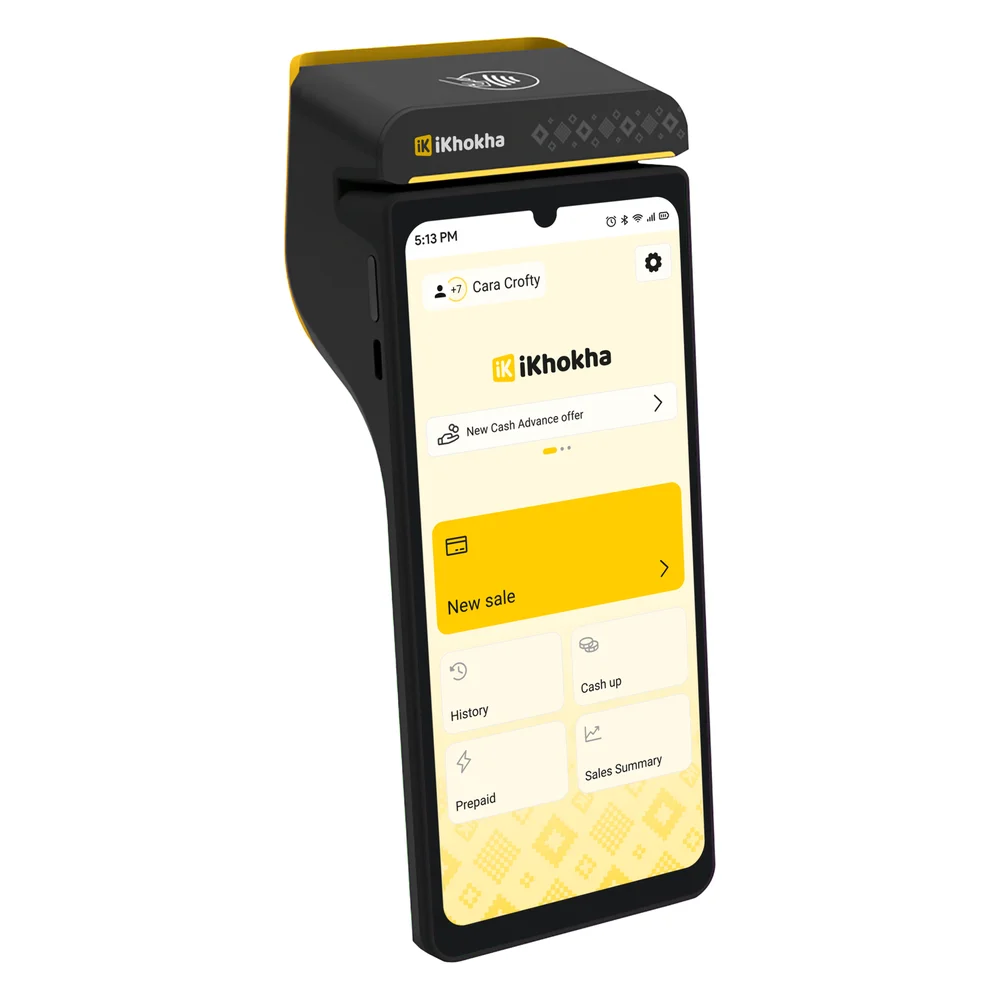
iKhokha iK Flyer
The iK Flyer Lite with a built-in printer for slips and vouchers, at the same fees.
My quick review of the iK Flyer, for a counter that sells prepaid all day
The iK Flyer is the one for a busy prepaid counter, because every voucher comes out on paper.
Where it stands out
- Prints receipts and prepaid vouchers
- The same fees as the iK Flyer Lite
- Pays into any bank
Buy it if
- You sell airtime or electricity all day
- Customers expect a printed slip
Skip it if
- You don't sell prepaid: the iK Flyer Lite is R800 cheaper
If you skip it, the best alternative
R100 less to buy (R1 399 against R1 499), with data included and free payouts, though its fee is slightly higher (2.30% against 2.10%). The iK Flyer prints prepaid vouchers too.
Read our full Yoco reviewPrices from ikhokha.com on 12 Nov 2026.
When a bank's card machine makes sense
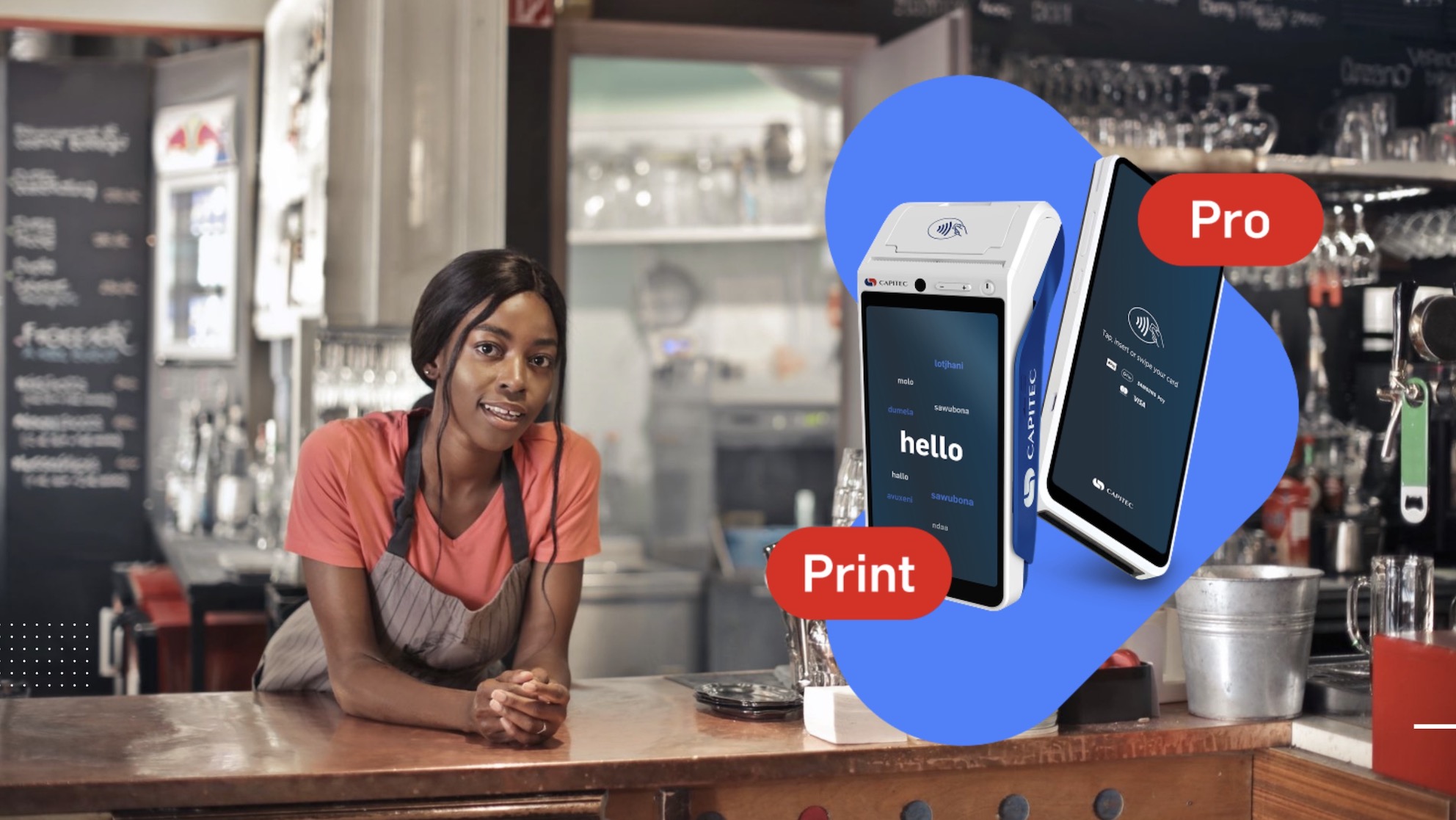
A bank's card machine is the better choice when you already bank there and every customer pays at your counter. You deal with one bank for your account and your card sales. Capitec is the clearest example. Its Capitec Pro costs R699 and charges 1.85% on local cards up to R50 000 a month, with data included and a free payout every morning, weekends too.
So for a business that already banks with Capitec, its machine costs less each month than Yoco's or iKhokha's. On card sales of R5 000, you pay R92.50 in fees and nothing more. iKhokha matches the 1.85% only for Nedbank businesses, and charges for its payouts and its SIM data on top.
Capitec pays only into a Capitec account, though, and a business registered with CIPC needs its business account, at R50 a month. Its machine takes cards in person only, with no QR codes or payment links for now. My Capitec card machine review covers the rest of what it does.
Very large card sales are the other case. At that size, banks price card fees for each business, and Capitec's fee on debit cards falls to 0.60% above R1 million a month. Yoco and iKhokha drop theirs too: iKhokha's Nedbank debit fee falls to the same 0.60%, and Yoco sets a custom fee above R200 000.
The other banks price their machines in their own way. Absa rents its SmartPay from R299 a month, with fees from 2.75%. FNB and Standard Bank price each business on a quote. Nedbank no longer sells machines of its own: its card machines now come from iKhokha, a Nedbank company.
Bank or fintech: which card machine should you get?
Get your bank's machine if you bank with Capitec and every customer pays at your counter. There, the Capitec Pro costs you less each month than either fintech. My Capitec vs Yoco and Capitec vs iKhokha comparisons work through that choice in full.
For everyone else, I'd start with a fintech and get the Yoco Khumo 2, because it pays into any bank and costs nothing to keep. Get the iKhokha iK Flyer Lite instead if you bank with Nedbank or sell prepaid. If you're torn between the two, because they're so close on price, my Yoco vs iKhokha comparison sets out every difference.
Therefore, a bank's machine saves you money in one narrow case. A fintech fits more businesses, and keeps fitting them as they start selling online or by link. To check that against your own business, the tool below matches you to Yoco, iKhokha or your bank from four answers, and says why.
Interactive · under a minute
Bank or fintech: which card machine suits you?
Your bank, how customers pay, prepaid, and what matters most each month.
1Where does your business bank now?
2How do your customers pay you?
3Do customers ask you for airtime, data or electricity?
4What matters most to you each month?
Before you answer

A payments company for most businesses, your bank for a few
Yoco and iKhokha pay into any bank, have no contract and let customers pay you by link or online. Capitec's machine costs less each month only if you already bank there.
The trade-off: Yoco charges 2.30% a sale. iKhokha charges 2.10%, or 1.85% on Nedbank, plus R2.50 a payout day and R75 a month for data unless you use Wi-Fi.
Prices and fees last confirmed on 12 November 2026.
Bank vs fintech card machines: questions people ask
Is a bank card machine better than Yoco or iKhokha?
Only if you already bank there and every customer pays in person.Capitec's machine then costs a Capitec customer less each month, at 1.85% with free data and payouts. For most other businesses, Yoco and iKhokha pay into any bank, have no contract and add payment links, an online store and POS software.
Which banks in South Africa offer card machines?
FNB, Standard Bank, Absa, Nedbank and Capitec all offer card machines to business clients.Capitec's Pro costs R699 with a 1.85% fee for its own customers. Absa rents its machines from R299 a month, with fees from 2.75%. FNB and Standard Bank price each business on a quote, and Nedbank's card machines now come from iKhokha.
Do I need a business bank account to get a card machine?
Not always. Yoco and iKhokha pay into the bank you already use, and Yoco signs up sole proprietors with no registered company.Capitec pays only into a Capitec account, and a business registered with CIPC needs Capitec's business account, which is R50 a month.
2 more questions
Can a bank card machine take payment links?
Capitec's machine can't for now: it takes cards in person only, with no QR codes or payments without the card present.Yoco and iKhokha both let you send a payment link by WhatsApp, SMS or email, and the customer pays by card on their own phone.
What is a fintech card machine?
It's a card machine from a payments company, or fintech, such as Yoco, iKhokha or WAPPoint, rather than from a bank.It pays into the bank you already use, and it comes with other ways to get paid, such as payment links, an online store and point-of-sale software.
Mentioned in this explainer
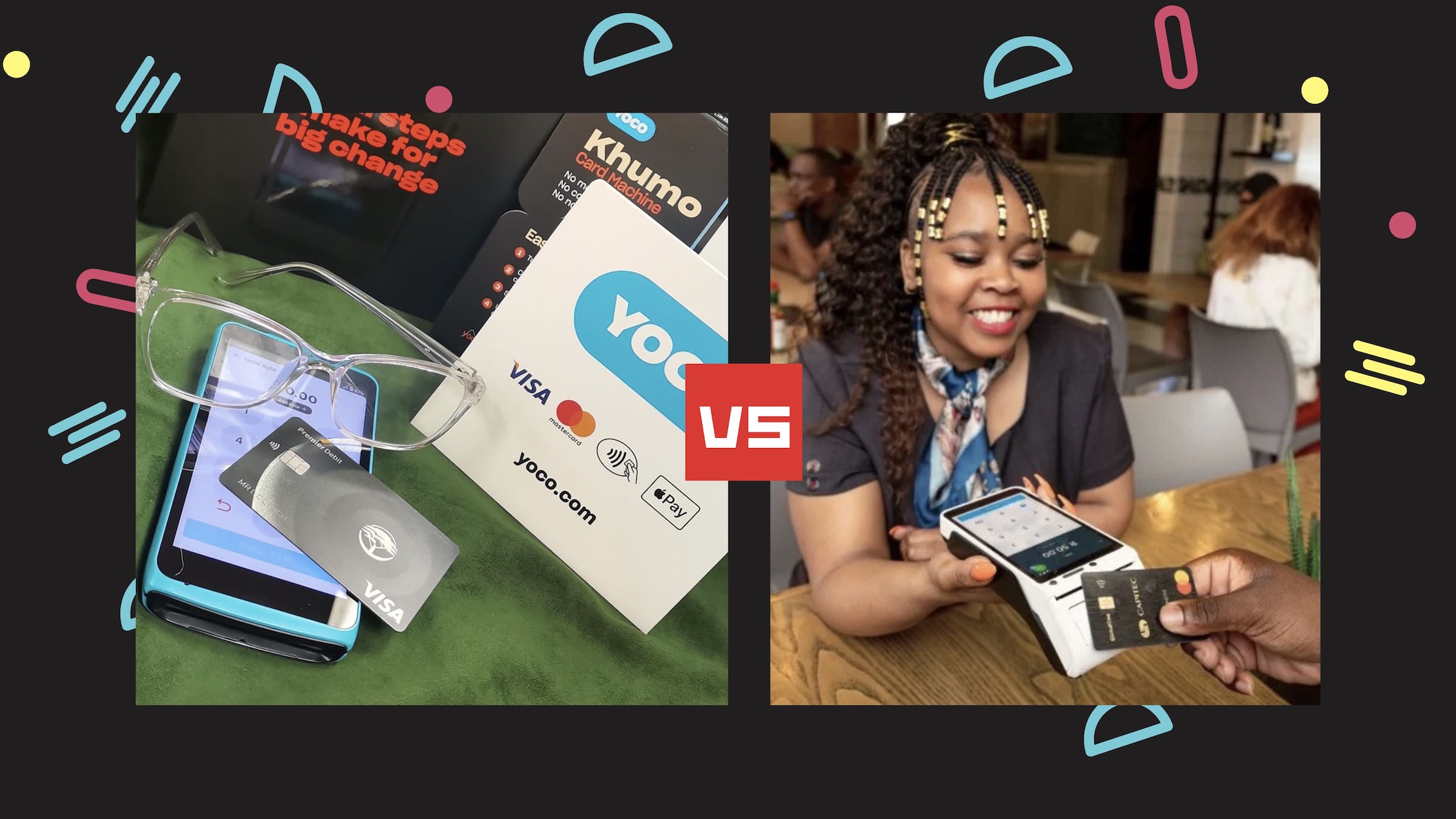 Head to headCapitec vs Yoco (2026): Which Card Machine Is Cheaper?Capitec is cheaper on rate at every tier and card type.Last confirmed on 5 Nov 2026
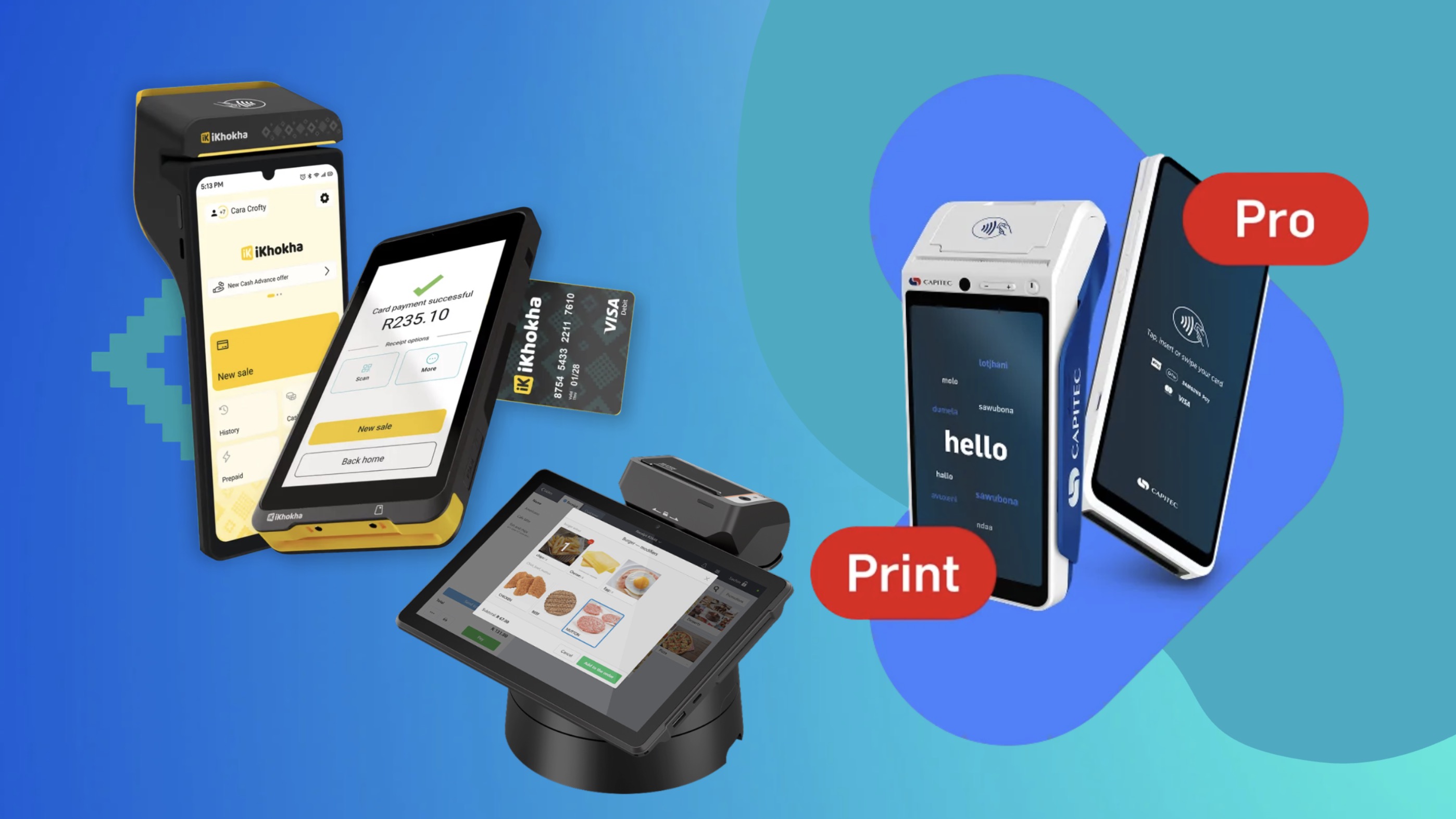 Head to headCapitec vs iKhokha (2026): Which Card Machine Is Better?Capitec vs iKhokha: both start at R699 and can charge 1.85%.Last confirmed on 12 Nov 2026
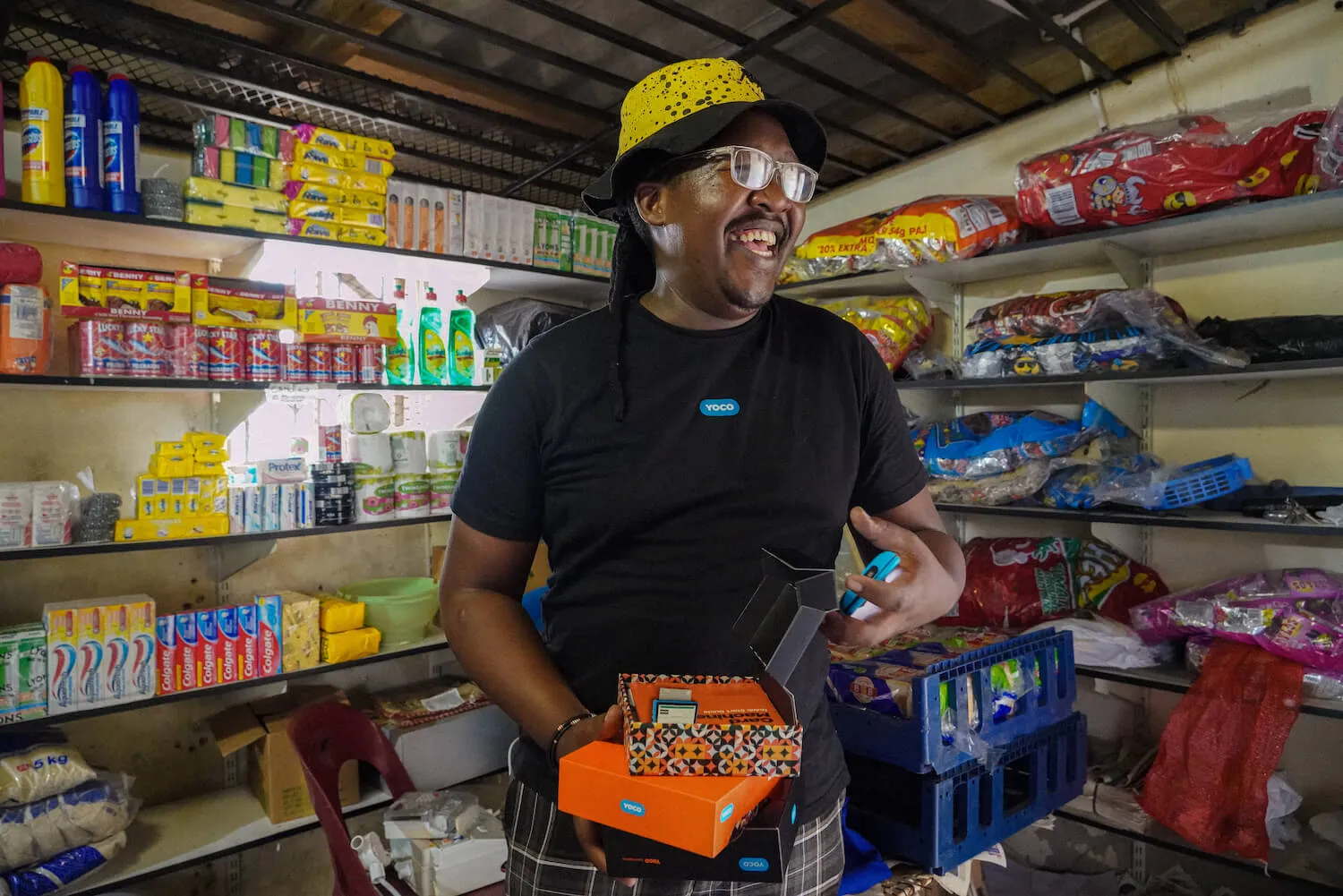
 Head to headYoco vs iKhokha (2026): Which Is Right for You?How Yoco and iKhokha really differ on fees, payouts, prepaid income, support and lending, and which one fits your…Last confirmed on 5 Nov 2026
Where the deals are
Deals confirmed 12 Nov 2026
- Ranked5 Best Card Machines for a Small Business in SA (2026)The same field, worked through by type of business: what a spaza, a salon, a restaurant, a market stall and a mobile…Verified deal10% offthe iK Flyer and iK Flyer LiteGet the dealSee the rankingVerified dealR100 offany card machineGet the deal
- Ranked11 Best Card Machines in South Africa (2026)11 SA card machines ranked on what each costs you over a year.See the ranking
- Every discount in one placeThe extra discounts we foundTwo live discounts on card machines right now, each confirmed on the date shown.See all the deals